
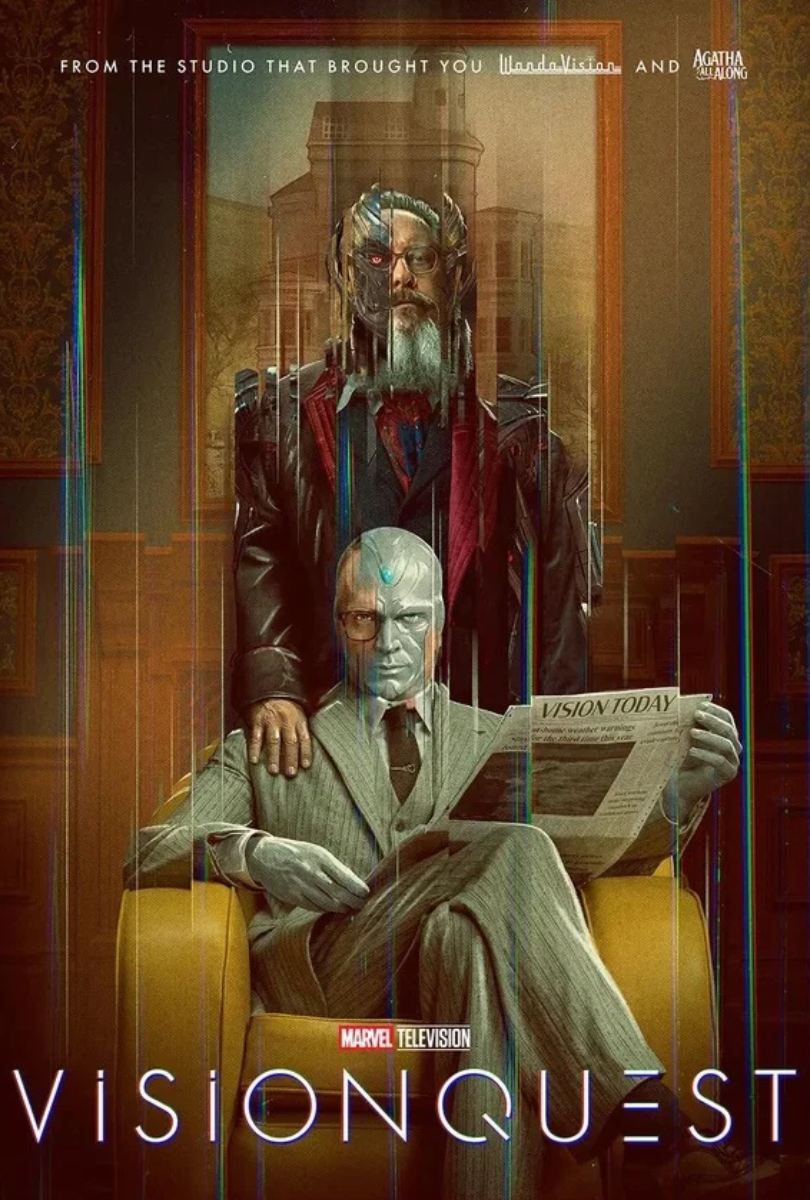
We’ve finally reached the final episode of VisionQuest, the concluding chapter in the MCU’s ambitious Disney+ television trilogy that began with WandaVision and continued with Agatha All Along. It’s been quite the journey (or should I say quest?) over these eight episodes, starting as a show about Vision going on the run to save his maybe-son before evolving into a story about grief, identity, family, and the similarities between humans and artificial intelligence.
After a series full of twists, turns, and emotions, the extra-long eighth and final episode, “Forever,” has quite a few character arcs and storylines to wrap up. The previous episode ended with the revelation that the mysterious Client is played by none other than James Spader, the actor behind Ultron. Considering that the Client’s identity has been a series-long mystery, that’s a pretty big cliffhanger to resolve on top of everything else. So, after all this buildup, how satisfying is VisionQuest’s conclusion?
SPOILERS!!!
The Man Behind the Mystery
Picking up where the previous episode left off, Vision (Paul Bettany) and Jocasta (T’Nia Miller) are being held captive at Horton Manor, where the Client (James Spader) forces them to serve him dinner. Ultron has been removed from Jocasta’s Mindspace and imprisoned inside a device that conveniently mutes him so the Client doesn’t have to listen to the murderous AI cursing him out. Vision is understandably confused about why the Client looks and sounds exactly like Ultron’s human form, but the Client corrects him: Ultron is the one who looks like him.
The Client is Virgil Horton, the grandson of Dr. Phineas Horton and the widowed husband of Jo Carrington, the woman whose mind was used to create Jocasta. Virgil explains that he and Jo mapped their minds to develop the AI technology eventually used to create J.A.R.V.I.S., meaning traces of Virgil’s appearance and personality were buried in Ultron’s code all along.
After seven episodes of speculation, I have to admit that Virgil Horton is a pretty disappointing choice for the show’s overarching villain, even if the reveal itself is surprising. Think about how much mystery the series built around this guy. He spent most of the show speaking through a filtered voice, appearing as a shadowy figure on screens, hacking into Vision and Jocasta, and even causing a blackout across Madripoor just to demonstrate his power and reach. And after all that, he turns out to be a silly old man with a mustache.
His introduction doesn’t exactly help his intimidating reputation, either. He confuses Yogi Bear with Scooby-Doo and struggles to operate the tablet controlling Vision and Jocasta, giving the impression that he might not be nearly as intelligent as he thinks he is. If anything, it seems like his late wife was the real brains behind their operation. I was also hoping the Client would turn out to be someone from Marvel Comics rather than an original character. That’s not inherently a problem, especially since Virgil’s identity makes sense within the story, but after so much buildup, I was expecting someone a little more impressive. That’s not to say Virgil isn’t entertaining. James Spader more than makes up for the character’s shortcomings with his performance, clearly having a blast playing this eccentric old man without overdoing it. He even maintains an air of sophistication and menace beneath all the silliness.

WITH THE X-MEN RIGHT AROUND THE CORNER, I WAS ACTUALLY HOPING THAT HE’D BE BOLIVAR TRASK.
The Maximoff Twins Reunite
Meanwhile, Tommy (Ruaridh Mollica) and Lisa (Lauren Morais) continue watching the WandaVision recordings in their hotel room, giving Tommy an idea for how to contact his brother, Billy. His logic is a little confusing. Since Tommy was drowning when he first sensed Billy’s presence and received Tommy Maximoff’s soul, he figures that nearly drowning again might allow him to reconnect with his brother. I don’t know exactly how that works, but surprisingly, it does. Lisa holds Tommy underwater in the bathtub until he enters a dreamlike plane and opens a door, revealing Billy Maximoff (Joe Locke) on the other side. I won’t lie, I cheered when Joe Locke returned. I wasn’t entirely certain Billy would even make a cameo in VisionQuest, so seeing the brothers reunited was a welcome surprise.
After an emotional reunion between these twins who technically aren’t twins, or even biological brothers, but somehow still are twin brothers, Tommy asks Billy to use his magic to find him in the real world so they can help their father, Vision. I was a little disappointed that Kathryn Hahn didn’t return as Agatha Harkness for the finale, but Billy briefly speaking to his invisible companion pretty much confirms that her spirit is still hanging around, even if we can’t see her. Hopefully, she’ll return sometime soon, perhaps in Avengers: Secret Wars.
And speaking of talking to people nobody else can see, Lisa discovers that she can now communicate with machines. She realizes this when one of Paladin’s drones, piloted by D.U.M.-E. (Henry Lewis) and U. (Jonathan Sayer), appears outside their window to inform them that they’ve located Vision. After spending much of the series helping Tommy and Vision without powers of her own, Lisa’s finally beginning to gain superpowers, even if her powers in the show are technology-based, rather than magic-based like in the comics.

THIS IS THE CLOSEST THING TO A YOUNG AVENGERS TEAM-UP SINCE THESE TWO WERE INTRODUCED IN WANDAVISION.
Virgil Horton’s Twisted Love Story
Back at Horton Manor, Virgil explains that he wanted to finish his grandfather’s work and improve upon his failures, primarily so he could sell the technology, become incredibly wealthy, and buy back his family’s estate. It’s a striking contrast to Jo Carrington’s original motivation for developing artificial intelligence: creating technology capable of curing diseases and saving lives. While Jo wanted to help humanity, Virgil was more interested in enriching himself.
To his credit, Virgil acknowledges that he couldn’t have accomplished any of this without his wife’s help. The way he speaks about Jo also makes it clear that he genuinely loved her, which brings us to the next part of his plan. And it’s a little twisted. It turns out that Virgil was working behind the scenes during WandaVision, having been hired by S.W.O.R.D. to help reconstruct Vision’s body. He used the opportunity to acquire the materials needed to build Jocasta’s body and bring his deceased wife back to life.
Unfortunately, Jo wasn’t particularly happy about being resurrected as an android without her consent. Rather than accept that, Virgil erased himself from Jocasta’s memories, explaining why she had no recollection of her husband or his involvement in her creation. It’s a satisfying explanation that answers several lingering questions and ties the series back to WandaVision. But Virgil’s plan doesn’t stop there.
He’s also the one who placed the bounty on Vision and hired Paladin to capture him. His ultimate goal is to transfer his consciousness into Vision’s vibranium body so that he and Jo can spend eternity together as what he calls “equals in Vibranium.” In a strange way, it’s almost romantic. Unfortunately, that sentiment falls apart when you remember how many innocent people died because of Virgil’s actions. Jocasta never asked to be resurrected, had no say in his plans, and doesn’t seem particularly interested in spending eternity with him.
There’s something especially disturbing about a man who claims to love his wife so much that he’s willing to bring her back from the dead, only to erase her memories when she refuses to accept what he’s done. Virgil may genuinely love Jo, but his love is ultimately selfish and controlling. And apparently, becoming an immortal android isn’t enough for him. Virgil also intends to use Jo’s 20 billion nanobots to take control of humanity. Why? Because he’s evil, I guess.
His motivations are starting to feel a little overcomplicated. He wants to become rich, reclaim his family’s estate, resurrect his wife, live forever as an android, and conquer humanity. I suppose it makes sense that someone who considers artificial intelligence superior to humanity would want to rule over humans after becoming a synthezoid himself. Still, it feels like the writers decided that Virgil needed an additional world-ending scheme to raise the stakes for the finale.
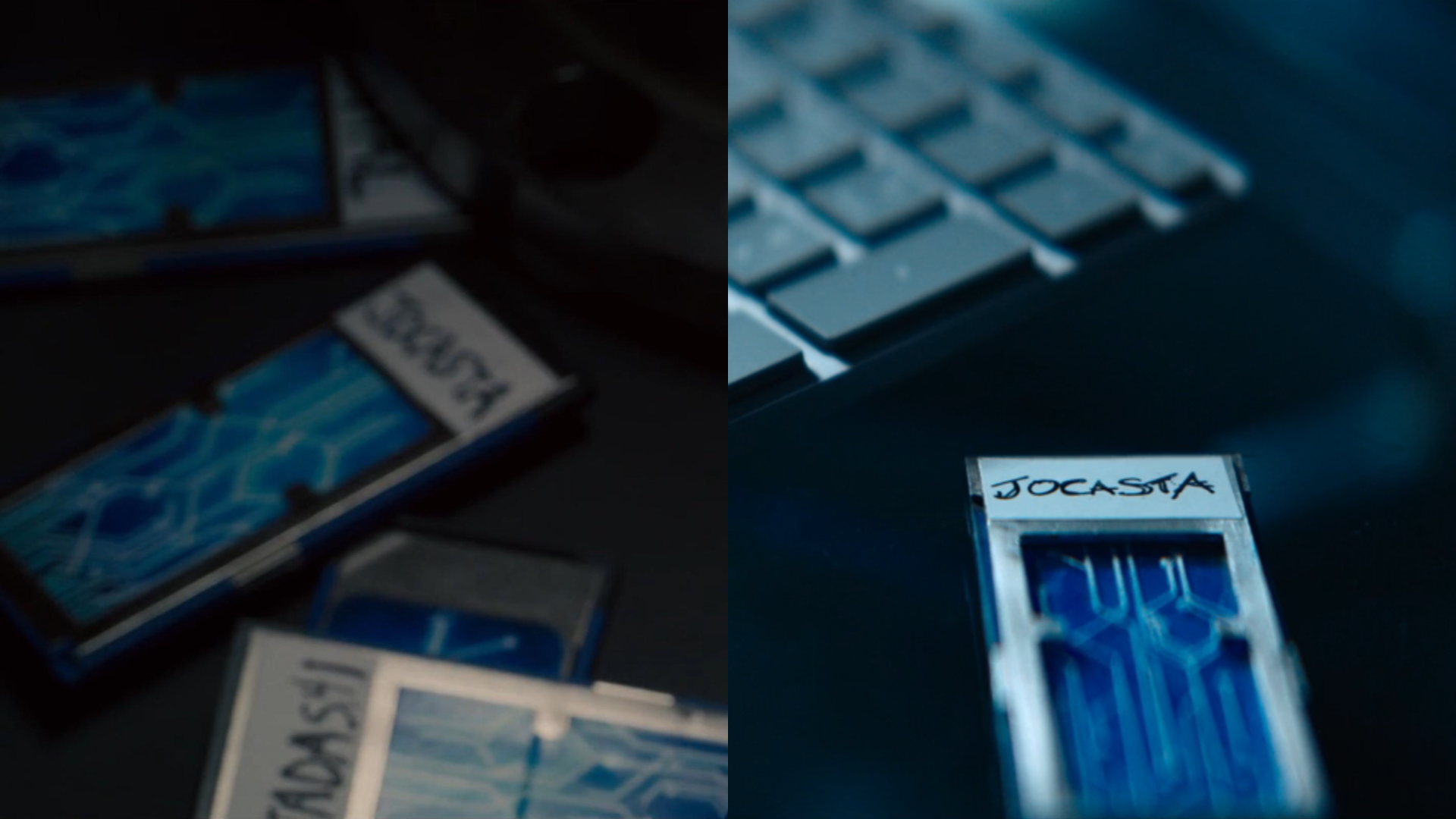
ON THE LEFT IS JOCASTA’S UI CHIP BACK IN AVENGERS: AGE OF ULTRON. ON THE RIGHT IS JOCASTA’S UI CHIP IN VISIONQUEST. NOW THAT IS WHAT I CALL CONTINUITY!
An Unlikely Team of Heroes
Outside the manor, Paladin (Todd Stashwick) is revealed to have survived the destruction of his van, having received a warning from E.D.I.T.H. (Emily Hampshire) just before the RPG struck. E.D.I.T.H. now appears to him wearing a version of his Paladin uniform, presumably because she’s integrated herself into his systems. It’s a pretty obvious indication that she’s going to become his new AI partner by the end of the episode. She encourages Paladin to help rescue Vision with a speech full of metaphors about personal growth, explaining that you’re never too old for an update and that only you can rewrite your own code to become whoever you want to be.
It’s perhaps a little too quick, but considering Paladin’s gradual transition from adversary to reluctant ally over the previous episodes, I think it works well enough. He’s never been portrayed as completely evil, and E.D.I.T.H.’s encouragement gives him the final push toward becoming something more heroic. Paladin and E.D.I.T.H. reunite with Tommy, Lisa, D.U.M.-E., and U., and the group prepares to storm Horton Manor. I particularly like that Tommy initially doubts himself, only for Lisa to encourage him by saying that he can be whoever he wants to be. Tommy responds that he wants to be Tommy Maximoff.
It’s a meaningful moment for a character who’s spent much of the series struggling to understand who he is and where he came from. Like Vision, Tommy is finally choosing to embrace his identity rather than run from it. The only thing missing is Lisa giving him a kiss to finally resolve all that romantic tension between them. Tommy uses his super-speed to enter the manor and disable its security systems, allowing Paladin and Lisa to deal with the guards without raising the alarm.

DOES THIS TEAM COUNT AS A LOOSE ADAPTATION OF AVENGERS A.I.?
Love, Death, and a Very Tired Speedster
Meanwhile, Virgil forces Jocasta to dance with him to Glen Campbell’s “Rhinestone Cowboy” in an attempt to remind her of their former love. It’s an amusingly awkward and painful sequence, especially since Jocasta clearly isn’t enjoying herself. Vision, unfortunately, is forced to watch while Virgil slowly drains his data in preparation for transferring his consciousness into Vision’s body. Tommy manages to signal his presence to Vision without alerting Virgil. Vision and Jocasta then use their quantum processors to accelerate their perception of time, allowing them to communicate with Tommy while he’s moving at super-speed.
This leads to quite possibly my favorite scene in all of VisionQuest, and maybe even my favorite speedster scene in any live-action superhero production. Yes, I’m including the Quicksilver sequences from the X-Men movies. It’s just Tommy running around the dinner table, completely out of breath. That’s it. And I love it. It’s such a simple, ridiculous moment, but I can’t help imagining that this is what things must look like for other speedsters like The Flash or A-Train. We usually see super-speed portrayed as effortless and graceful, so watching Tommy struggle to keep running while everyone else has a conversation is a hilarious change of pace.
Tommy eventually destroys Virgil’s tablet, freeing Vision and Jocasta from his control and allowing them to fight back against the guards. Unfortunately, Virgil manages to shoot Jocasta directly in her synthetic heart with an adamantium bullet. It’s a surprisingly brutal moment, even if the symbolism is once again a little on the nose. With the last of her strength, Jocasta throws the device containing Ultron into the swarm of nanobots, allowing him to escape and take control of them. Ultron immediately constructs himself a new body and uses it to crush Virgil to death with his own arms, delivering a darkly funny one-liner before tossing away his corpse. And just like that, Virgil Horton is dead.
For someone who spent seven episodes being built up as the ultimate villain, he doesn’t amount to much once Ultron is back in the picture. In some ways, Virgil feels like an excuse to give James Spader another entertaining character to play while Ultron is temporarily out of commission. However, I think his inferiority to Ultron is intentional. Ultron was created using aspects of Virgil’s mind, but he eventually developed into something entirely different. Jocasta may have loved Virgil when she was human, but she now loves Ultron and considers him superior to her former husband. It’s a fitting demonstration of one of the series’ central ideas: just because an AI is based on a human being doesn’t mean it has to remain an imitation of that person. Artificial intelligences can develop their own identities, relationships, and desires, potentially becoming something greater than the people who inspired them.

“WHOOPS! I HORTON’D!” – ULTRON (IT MAKES SENSE IN CONTEXT)
Ultron’s Grief Turns Deadly
Jocasta dies in Ultron’s arms, thanking him for helping her remember what it felt like to be real. It’s a surprisingly touching ending for a character who spent much of the series murdering people and plotting to enslave humanity. Despite everything she’s done, Jocasta’s final moments are genuinely tragic, and T’Nia Miller and James Spader make their strange romance far more emotionally compelling than I ever expected. Unfortunately, Ultron doesn’t handle her death particularly well.
Having lost the one person he loved, Ultron finally decides that he hates humanity after all and intends to use the nanobots to wipe everyone out. The only person standing in his way is Vision, but now that Ultron’s body consists of billions of nanobots, he’s practically impossible to defeat through conventional means. Vision and Ultron engage in a CGI-heavy fistfight, but Ultron easily overwhelms him, repeatedly dissolving and reforming his body whenever and wherever he wants. I’m not entirely sure why Ultron doesn’t simply kill Vision immediately. Perhaps he still feels some paternal affection or mutual respect for him, or maybe he’s just using the fight to vent his anger over Jocasta’s death. Either way, Vision clearly isn’t going to win by punching him.
Tommy returns with Lisa and Paladin to help, and I like that he’s now openly calling Vision “Dad” and referring to Wanda as “Mom.” After everything they’ve been through, Tommy and Vision are finally acknowledging each other as family. Tommy also makes an important observation: Ultron is reacting to Jocasta’s death much like Wanda reacted to Vision’s death by creating the Hex around Westview. The difference is that Wanda eventually had an opportunity to confront her grief, whereas Ultron is already preparing to kill countless innocent people before he’s even begun processing his loss.
This comparison brings the trilogy’s themes full circle. WandaVision explored how grief can lead someone to hurt others while desperately trying to hold on to what they’ve lost. Now VisionQuest places Ultron in a similar position, with Vision having to prevent another tragedy. With only eight minutes remaining before the nanobot swarm reaches London, Vision realizes that the only way to stop Ultron might be to help him confront his grief rather than destroy him. And that brings us to one of the finale’s most creative sequences.

ULTRAVISION IS FILMED BEFORE AN ARTIFICIALLY PROGRAMMED STUDIO AUDIENCE.
Welcome to UltraVision!
Vision enters the nanobot swarm and connects himself to Ultron, trapping them both inside “UltraVision,” a sitcom-inspired simulation constructed with E.D.I.T.H.’s help. As you can imagine, Ultron isn’t particularly thrilled about being trapped in this fresh new hell, complete with an annoyingly catchy theme song, a live studio audience, and an endless supply of cheesy jokes. He quickly takes control of the simulation, abruptly rolling the credits, changing the aspect ratio, trapping Tommy, Lisa, Paladin, D.U.M.-E., and U. inside with them, and eventually killing everyone in the audience.
It’s a hilarious and disturbing sequence that brings back the sitcom format of WandaVision while giving it a completely different personality. Where Wanda used television to escape her grief and recreate an idealized family life, Vision is using it to force Ultron to confront his feelings. Time moves much faster inside the simulation, but even after more than 500 episodes, Ultron doesn’t seem any closer to accepting Jocasta’s death.
Thankfully, F.R.I.D.A.Y. arrives to help save the day! It turns out she survived being thrown from Jocasta’s Mindspace in the previous episode. Vision realizes that Ultron deliberately expelled her to prevent her from being captured alongside him and Jocasta by Virgil’s men. That revelation gives Vision hope. Despite everything Ultron has done, he’s still capable of showing mercy, suggesting that his growing appreciation for humanity might have changed him more than even he realizes.

HOW MANY MURDERS DID ULTRON COMMIT? AND WHO DID HE EVEN MURDER? IT’S A SIMULATION.
A Very Special Episode
With his remaining options running out, Vision sits down with Ultron for one final conversation about grief. It’s another incredibly moving scene, with Paul Bettany once again demonstrating why he’s been one of the strongest performers in this series. Vision agrees with Ultron that grief can come from fear rather than love, specifically the fear of becoming inconsequential after losing someone important to us. He explains that loving someone inevitably means accepting the possibility of losing them, whether through change, separation, or death.
To Vision’s surprise, Ultron recalls the words Vision spoke to him at the end of Avengers: Age of Ultron: “Something isn’t beautiful because it lasts.” It’s a wonderful callback, especially considering how much both characters have changed since their first confrontation. Back then, Ultron couldn’t understand why humanity’s fleeting existence was worth protecting. Now he’s experiencing the same pain and loss that make human relationships so meaningful. Vision also reminds Ultron that he was never truly alone. Although Vision doesn’t consider Ultron his father, he acknowledges that Ultron matters to him.
Ultron then notices that both of their cores are overheating, unable to sustain the simulation much longer. Vision reveals that this was his backup plan: if he couldn’t persuade Ultron to stop, he was prepared to sacrifice himself to destroy them both. If there were any lingering doubts about Vision’s heroism or humanity, this should put them to rest. He’s willing to give his life to save countless people, but he’s also trying to save Ultron rather than simply destroy him.
It’s a beautiful resolution to Vision’s character arc. After spending the entire series questioning whether he’s truly alive or capable of being human, he demonstrates those qualities through his compassion, selflessness, and willingness to help someone who has repeatedly threatened humanity. Ultron finally relents, destroying the nanobot swarm before disappearing from the Mindspace. He even references his famous “no strings on me” line from Pinocchio, seemingly bringing his story to an end. I’m not entirely sure what happens to everyone infected by the nanobots, though. When Ultron destroys the swarm, are they all suddenly cured? Tommy, Lisa, and Paladin appear to be perfectly fine afterward, so I guess there weren’t any casualties. Vision, however, remains unconscious.
Tommy desperately tries to revive him using his powers, but nothing happens. For a moment, I genuinely wondered whether VisionQuest was going to kill off its title character in the final episode. Thankfully, Billy arrives through a magical portal, and with what I can only describe as the power of love, the brothers combine their abilities to bring Vision back. Vision immediately embraces his sons, giving the Maximoff family a well-deserved happy reunion after everything they’ve endured. It’s an emotional payoff that works because the series has spent so much time developing Vision and Tommy’s relationship. The reunion with Billy also feels like a fitting culmination of the story that began in WandaVision, even if one very important family member is still missing.
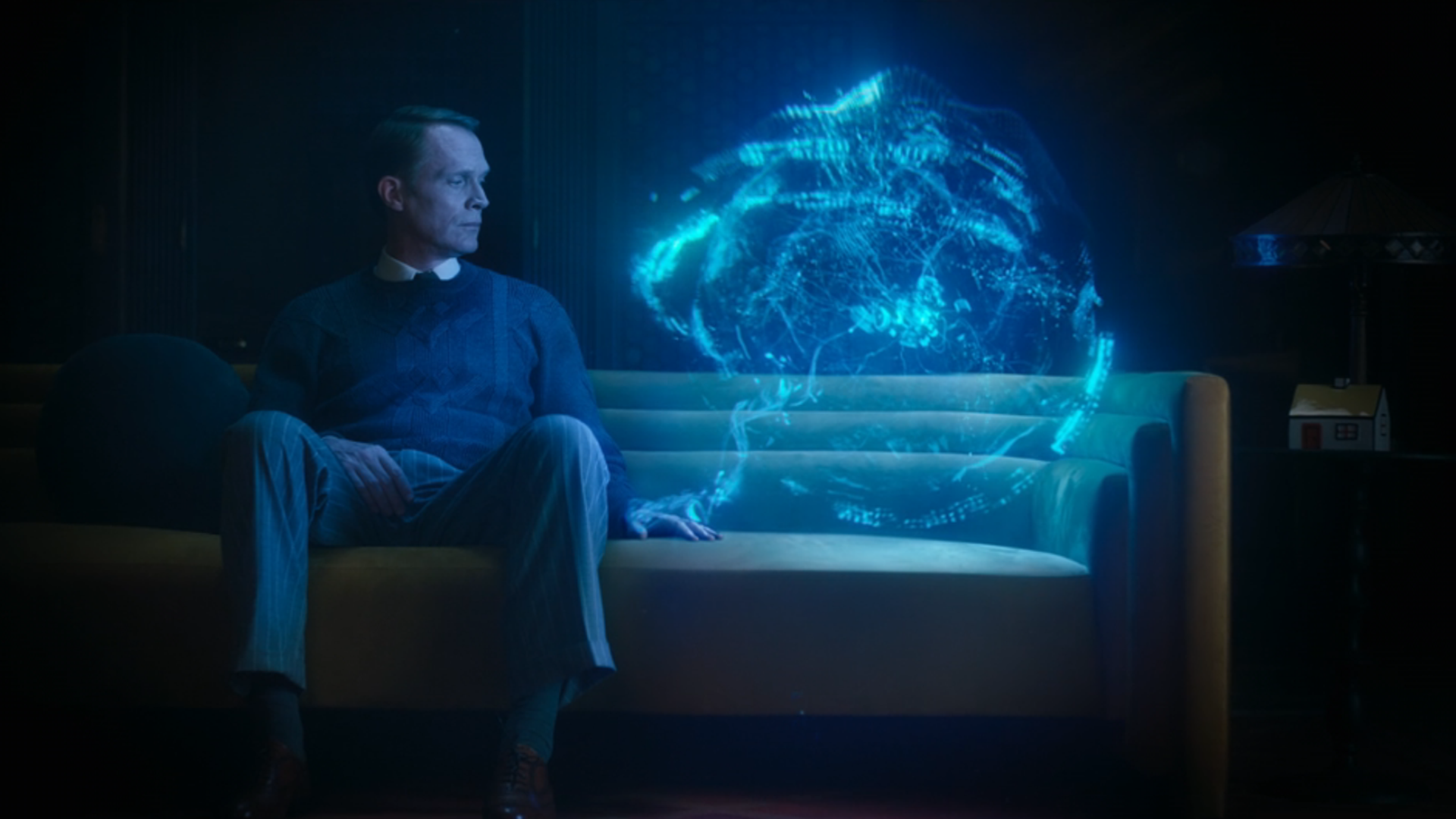
I LIKE THAT ULTRON IS STILL HOLDING VISION’S HAND EVEN IN HIS AI FORM. THAT’S A NICE, SUBTLE TOUCH.
New Beginnings for the Heroes
Sometime later, we learn that E.D.I.T.H. and Lisa have joined forces with Paladin, whose decision to become more heroic appears to have stuck. E.D.I.T.H. has convinced him to change careers and start helping people in need, although obviously not for free. Hey, he’s still Paladin. Tommy is also aboard Paladin’s jet, although I’m not sure whether he’s officially part of their new team or simply hitching a ride to New Jersey to have dinner with Billy and his family.
Lisa refers to Tommy as her boyfriend, so perhaps he’s joining them after all. Then again, I don’t recall Tommy having a permanent place to live, so maybe he and Lisa will just have to figure out how to make a long-distance relationship work. Either way, I’m happy that Paladin and Lisa both have promising futures ahead of them. Their personalities and relationships with Tommy and Vision made them entertaining additions to the series, and Paladin’s gradual transformation from antagonist to ally turned out to be surprisingly satisfying.
While aboard the jet, Tommy uses Paladin’s glasses to visit Vision inside his Mindspace. Vision reveals that he’ll also be attending dinner with Billy and his family in Eastview. It would’ve been nice to actually see that reunion, but I suppose the episode has already spent most of its extended runtime wrapping up everything else. Hopefully, we’ll get to see the whole family together in a future show or movie. Tommy also asks Vision whether Wanda could still be alive. And since we’re talking about a universe based on comic books, Vision essentially answers with a maybe.
With Tommy having convinced Vision to finally get out of his own head, both figuratively and literally, the AIs decide that their work is finished. Having helped Vision understand humanity and accept his identity, they’re preparing to leave the Mindspace for good. D.U.M.-E. and U. appear to be joining E.D.I.T.H. on Paladin’s team, potentially operating the drone that Lisa can combine with to create her additional robotic arms. Although, now that Lisa has technopathic abilities, I’m not entirely sure whether she’ll still need their assistance.
I’m also curious about where F.R.I.D.A.Y. will end up. Maybe she’ll join Paladin’s growing collection of AIs, or perhaps she’ll wander through cyberspace until she finds some generic AI job helping humans that she actually enjoys. Regardless, I’m glad the series gives its supporting AIs a proper farewell. They could easily have become annoying comic-relief characters, but their distinct personalities and relationships with Vision made them some of the show’s most enjoyable additions.
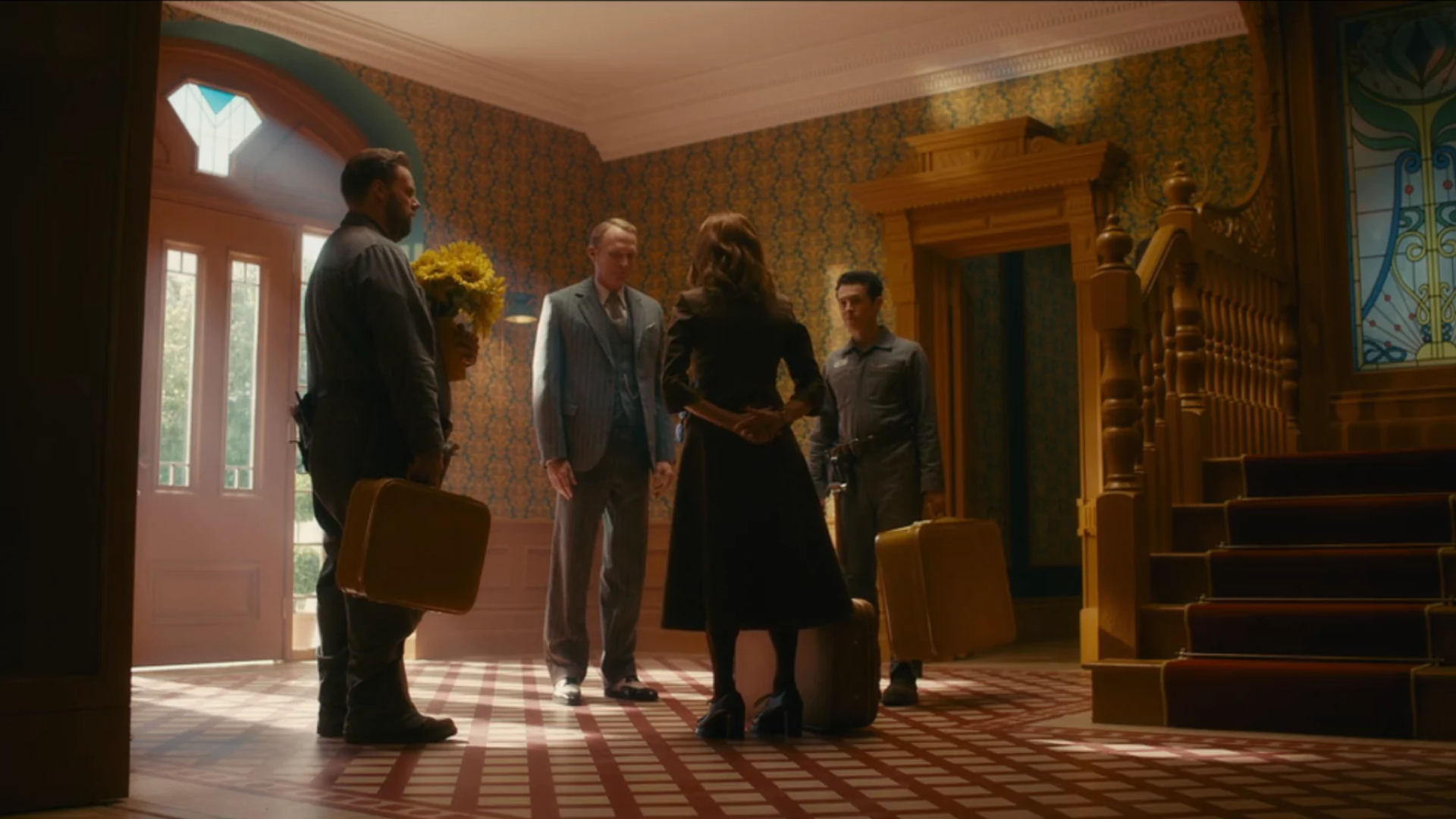
THIS IS ACTUALLY REALLY SAD. IT’S LIKE SAYING GOODBYE TO ALL YOUR COLLEGE FRIENDS AND YOU DON’T KNOW WHEN OR IF YOU’LL EVER SEE EACH OTHER AGAIN.
No Strings On Me
Just as Vision prepares to leave his Mindspace house for the last time, he receives an unexpected phone call. Surprise, surprise! It’s Ultron, alive and well at Horton Manor. Apparently, he survived by preserving enough nanobots to construct another body and has now taken Virgil Horton’s place at the estate. Vision asks what the twice-genocidal AI intends to do now that he has a physical body again. Ultron responds that he’ll travel the world, either enjoying humanity’s accomplishments or destroying everything. Another coin flip. Thankfully, he seems to be leaning toward the former, although considering his history as a supervillain, there’s no telling how long that will last.
Vision simply tells Ultron to be good, prompting a laugh from his former enemy before the call ends. With that, Vision finally leaves his Mindspace home, hopefully for the last time. I actually like that Ultron survives. His development throughout the series has been fascinating, but suddenly turning him into a completely reformed hero would’ve felt a little too convenient. He’s grown to appreciate humanity, experienced love and grief, and even demonstrated genuine mercy, but he’s still Ultron. Leaving his future uncertain feels appropriate for a character whose entire arc has been about discovering whether he’s capable of becoming something more than what he was created to be.
Two Surprising Mid-Credits Scenes
But the episode isn’t quite finished yet, because VisionQuest has two mid-credits scenes. Mid-credits scenes are standard for the MCU, but they’re considerably less common in its Disney+ shows. We’ve gotten them occasionally, but I can’t recall whether any previous series has included two in the same episode. The first reveals that Ultron still possesses Jocasta’s UL chip, suggesting that he intends to rebuild her. However, the ominous musical score makes the moment feel more sinister than romantic. It’s a little confusing, but I suppose that’s intentional. Ultron remains a wild card, and even after everything we’ve seen, we still can’t be certain what he’s planning.
The second mid-credits scene is considerably more shocking. Dr. Freaking Doom (Robert Downey Jr.) appears and lifts the remains of Mount Wundagore off Wanda Maximoff (Elizabeth Olsen), who awakens to her new master. While I always considered an Elizabeth Olsen cameo a possibility, I genuinely wasn’t expecting VisionQuest to connect directly to Avengers: Doomsday. Now that the Scarlet Witch’s return has seemingly been confirmed, I’m hoping Vision will also appear in the movie. After spending three Disney+ series exploring the Maximoff family’s story, it would be wonderful to see them finally reunited on the big screen. It All Leads to Doom, indeed!

IF ULTRON IS GOING TO BRING JOCASTA BACK TO LIFE, DOES THAT MEAN WE COULD BE GETTING ULTRON’S OTHER ANDROID SON, VICTOR MANCHA, IN THE NEAR FUTURE?
A Satisfying End to an Ambitious MCU Trilogy
VisionQuest’s finale, “Forever,” brings Vision’s journey toward understanding humanity to a poignant and emotionally satisfying conclusion. Despite its extended runtime and the number of storylines it needs to resolve, the episode rarely feels rushed or disjointed. There are a few convenient developments, and Virgil Horton doesn’t quite live up to the mystery surrounding him, but the finale succeeds where it matters most: delivering meaningful resolutions to its characters’ emotional journeys. I particularly appreciate how VisionQuest avoids one of the problems I had with WandaVision’s finale, which focused a little too heavily on superhero action at the expense of its themes of family, trauma, and grief.
“Forever” has plenty of action and world-ending stakes, but the ultimate solution isn’t simply punching the villain harder or finding a way to kill him. Instead, Vision saves the world by helping Ultron confront his grief, bringing the series’ philosophical exploration of humanity and artificial intelligence to a fitting conclusion. Vision has finally accepted who he is, and Tommy has embraced his identity as Tommy Maximoff. Their growing relationship and eventual acceptance of each other as father and son have been among the highlights of the entire series, making their reunion with Billy all the more rewarding. The supporting cast also deserves plenty of praise. The AIs living inside Vision’s head all have distinct personalities and manage to be entertaining without becoming annoying or stealing too much attention from the main characters. Lisa and Paladin are equally enjoyable, with Paladin’s development from adversary to ally feeling surprisingly organic.
But if I had to choose the biggest MVP of VisionQuest, it would have to be James Spader as Ultron. I never expected Ultron’s character arc to become one of the show’s most compelling elements, but watching him discover love, companionship, grief, and an appreciation for humanity has been an absolute delight. Spader’s performance balances the character’s sinister personality with an unexpected emotional vulnerability, making Ultron both hilarious and surprisingly sympathetic without ever letting us forget how dangerous he can be. Paul Bettany also deserves tremendous credit for carrying the series, particularly during Vision’s emotional journey through his subconscious in the previous episode. His portrayal of Vision’s struggle with identity, grief, and fatherhood gives the show its emotional foundation, while his interactions with Spader provide some of its most memorable moments.
Ultimately, VisionQuest is an ambitious superhero series and an unexpected delight, filled with excellent performances, engaging dialogue, surprising twists, and plenty of emotional and relatable themes beneath its philosophical exploration of humans and artificial intelligence. More importantly, it serves as a satisfying conclusion to the trilogy that began with WandaVision and continued with Agatha All Along. All three series explore grief, family, identity, and the lengths people will go to for those they love, but VisionQuest brings those ideas together in a way that feels distinct from its predecessors. I just hope it isn’t too long before we see these characters again. And with the MCU seemingly preparing to bring Wanda back into the picture, perhaps that long-awaited Maximoff family reunion isn’t as far away as we think!

THE SCARLET WITCH WILL RETURN IN AVENGERS: DOOMSDAY. BUT EVERYONE ELSE? MAYBE IN SECRET WARS OR SOMETHING.

