
In late 70s and early 80s, the video game industry has reached a zenith, generating more than $5 billion annually in North America by 1981. A large sum of that was due to one little yellow hockey puck that ate ghosts. Namco employee Turo Iwatani, with a team of nine others, would come together to create Pac-Man. The concept was based on eating, and the original title was Pakkuman, inspired by the Japanese onomatopoeic slang phrase paku-paku which describes the mouth movement when opened widely and closed in succession. Originally thought to have been inspired by a missing slice of pizza, Iwatani said in a 1986 interview that this was half-truth and that the Pac-Man’s shape was in an attempt to give him a mouth. The idea of gaining power from eating came from Popeye, who, as we all know, gained power from eating spinach. This led to the game being called Puck Man until it was changed to Pac-Man for US release by Bally division Midway due to possible vandalism of people changing the ‘P’ into an ‘F’ to form an obscenity.

The original arcade cabinet
Pac-Man was launched on March 22, 1981 in Japan by Namco and received lukewarm response as Space Invaders and other games of the like were more popular. However, the little dot chomper’s success surprised competitors and distributors alike in North America. The game was overlooked by marketing executives in favor of a racing game called Rally-X; however, it gained popularity amongst the public, men and women alike, who quickly embraced the game. Pac-Man soon overtook Asteroids as the best-selling game, grossing over $1 billion in quarters within a decade and beating out even the highest-grossing film at the time, Star Wars, by the end of the decade. It sold more than 350,000 arcade cabinets, retailing at around $2400 each, for $1 billion within 18 months. This is equivalent to $2.4 billion in had the game been released in 2011. By 1982, 400,000 Pac-Man arcade cabinets sold worldwide, generating an estimated 7 billion in quarters. During his reign, Pac-Man was seen on everything including t-shirts, wastepaper baskets, lunch boxes, hat, etc. Music duo Buckner and Garcia created and released the song “Pac-Man Fever” in 1981 which went to #9 on the BIillboard Top 100 charts and was certified Gold by 1982. Parody song master Weird Al Yankovic recorded a song titled “Pac-Mac” that was a comedic take on the Beatles song “Taxman”. An animated series was produced by Hanna-Barbera and aired on ABC from 1982-1983, as one half of the “Rubik/Pac-Man Hour.”
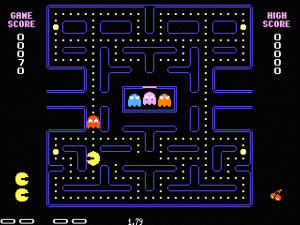
Pac-Man’s familiar maze running would inspire other franchises such as Metal Gear.
Pac-Man is one of the few games to have been consistently published for over three decades. Several unlicensed clones appeared soon after its release. These counterfeit arcade machines made nearly as much money as the original. A far less than stellar port was released for the Atari 2600. The game constantly flickered due to the 2600’s memory size. Despite this, the game sold well and became the company’s best seller. However, Atari overestimated demand by producing 12 million units, of which 5 million went unsold. This poor imitation severely damaged the company’s reputation and factored into Atari’s decline and the 1983 North American video game crash, alongside another stinker, E.T. the Extra-Terrestrial. Luckily, continued Pac-Man releases helped bring the character back, most notably on Nintendo’s many systems including the NES, Game Boy, Game Boy color and Sega’s Game Gear system. Pac-Man spawned several sequel and spin-offs in which only one was designed by Toru Iwatani. Some of the follow-ups were not developed by Namco either. The most significant of these is Mrs. Pac-Man released in 1981, which was sold to and released by Midway without Namco’s permission. Namco sued Midway for exceeding their license. Eventually, Bally Midway worked things out with Namco to officially release Mrs. Pac-Man as a sequel, resulting in Namco owning the character in its future releases. Midway would repeat itself with releasing unauthorized sequels which would lead to Namco cutting ties with the company.
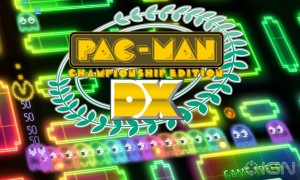
Namco has released other platform games based on the series such 1984’s Pac-Land and the Pac-Man World series which put the maze racing, pellet muncher in a 3-D world which still uses elements set by the original game. Pac-Man would return to his classic roots in 2007 with the release of Pac-Man Championship Edition, helmed by creator Toru Iwatani. The game was a new take on the classic series. Pac-Man still runs the maze eating pellets but the ghosts follow him in chain. Passing by more ghosts make the chain grow until Pac-Man eats a power pellet and devours all the ghosts racking up points fast and gaining more speed. If Pac-Man is cornered, he can use the game’s bomb feature to send the ghosts back to their station in the center of the maze.
Towards the end of the 20th century, Pac-Man became the highest grossing game of all time, generating more than 10 billion in quarters ($2.5 billion). His popularity is still as influential today as it was years ago, with tournaments being held on the original arcade game as well as modern versions. A computer animated series called Pac-Man and the Ghostly Adventures premiered on Disney XD in 2013. Pac-Man has also been referenced in the 2010 film Scott Pilgrim vs. the World, where the game’s origins as Puck-Man is mentioned several times. Clyde appears in the Disney animated film Wreck-It Ralph as one of several villains participating in a group therapy session, voiced by Kevin Deters. His cohorts, Inky, Blinky, and Pinky, appear together in Game Central Station for a few scenes, and Pac-Man makes a cameo appearance during the Fix-It Felix Jr. 30th Anniversary party. Pac-Man has set several records including eight from Guinness World Records: Gamers Edition 2008. In 2014, Pac-Man became a playable character in the game Super Smash Bros. for Nintendo 3DS and Wii U. Pac-Man will be appearing in the upcoming film Pixels (2015), with Denis Akiyama playing series creator Toru Iwatani.
-
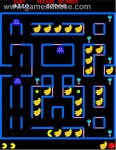
- Super Pac-Man featured keys which can be used to open more section of the maze. The super pellet grants Pac-Man invincibility and increases his size.
-

- Pac-Man and Mrs. Pac-Man (referred to as Pepper in the animated series) tied the knot in 1981.
-
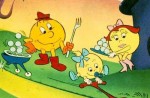
- Pac-Man lived the suburban life in the 1982-1983 CBS series.
-

- Pac-Man returned to television in 2014 with ‘Pac-Man and the Ghostly Adventures’ where he appears to have been given a younger look.
-
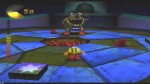
- Pac-Man faces against Tok-Man in ‘Pac-Man World’.
-
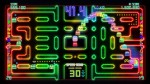
- The classic maze running, dot chomping game was revitalized in 2007 with Pac-Man Championship Edition
-

- Toru Iwatani created Pac-Man in 1980.
Pac-Man has one of the longest storied careers in gaming. So let’s give a big a happy birthday to that little hockey puck with the bottomless pit of a stomach. Sorry, Kirby. Pac-Man was chomping down on baddies before you. And that’s why people today still have Pac-Man Fever.
Buckner & Garcia perform Pac-Man Fever on Dick Clark’s American Bandstand!!

