

Well, J1sters. Netflix has already proven its mettle by making a worthy live action adaption of One Piece and are looking to catch lightning again with their take on Avatar: The Last Airbender. To prepare for this series, I took the liberty of refreshing my memory by watching the original. So far, they are on point. As with the live One Piece, The Last Airbender is condensed and focuses on key elements that drove the story and character development. There are changes but they do not take away from what we already know about the story. If anything, these changes enhance and help move things along as well as answer some questions they were left in the original.
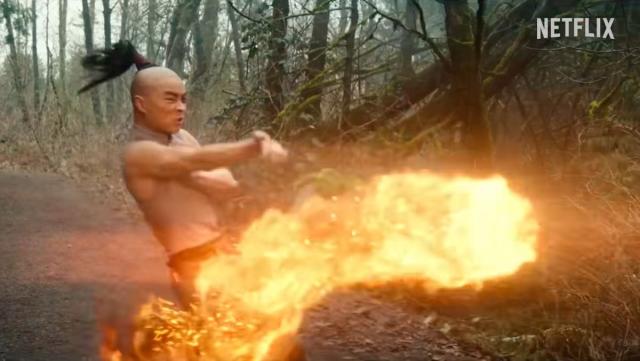
Firebenders in Netflix’s The Last Airbender actually create the fire rather than finding a “fire source” to use their abilities.
One example of this is the attack on the Southern Air Temple by the Fire Nation. While we know that the Airbenders were exterminated by Fire Nation soldiers, the details of this conflict are not fully revealed in the original series. The live series delves into this and gives us an idea of what the battle between the Airbenders and the invading Firebenders would be like. The first episode also tells Aang’s past life when he lived at the Southern Air Temple where he was told that he is the latest Avatar, a story that is not explored until the third episode of the animated series. However, the live action’s first hour does a fine job of not only condensing the first three episodes, but also does so at a pace that does not feel rushed and keeping the core plot device moving smoothly. This is the same tactic that was used with One Piece – staying focused on core elements while telling a familiar story with changes that do not dampen it. Sokka and Katara still find Aang encased in an iceberg and take him back to their village, but it is their grandmother who tells the story of the Avatar via reciting the opening dialog of the original show. Prince Zuko still attacks their village, but Sokka puts up a fight against the exiled prince instead of being soundly defeated as in the cartoon. Katara still gets hold of the Water Scroll; however, it is her grandmother who hands it her instead Katara stealing it from a band of pirates who stole it from the Northern Water Tribe. Aang, Katara and Sokka’s encounters on Kyoshi Island and the Earthbender city of Omashu differ from the original series yet their meetings with certain characters (Bumi and Jet for example) still occur with slight changes.

The outfits are more in line with the original series.
Now, let’s talk about the meat and potatoes of Avatar: The Last Airbender. The bending elements are more on point than in the 2010 film, particularly with the Firebenders. The fire bending in Netflix’s version of the Avatar: The Last Airbender match the original series where the fire is created by the caster as opposed to M. Night Shyamalan’s movie where the Firebenders needed to find a source of fire to use their abilities. The same goes for the earth bending. To me, the earth bending in the 2010 movie looked chalky and very muddy compared to the Netflix version which does a better job at following the original series. The airbending is better as well. Instead of seeing dust being churned up, we see the actual flow of air whenever Aang does his thing. And these aren’t the only impressive visuals. The locations featured in Avatar such as the Southern Air Temple, Southern Tribe Village and Omashu match their depictions in the cartoon meaning that the people behind the Netflix version did their homework more so than Shyamalan’s crew. They even found the right actors for the characters. Gordon Cormier is better at conveying Aang’s innocence than the boy who played him in the movie nobody talks about. Plus, we can see his dang tattoos. Kaiwentiio is a way better Katara not only in appearance but also in attitude and Ian Ousley does a good job bringing out Sokka’s cynicism. Also, like many fans, I am happy that we have a proper Prince Zuko who actually has his proper scar instead a barely visible blemish that inspired Scar’s look in the CGI “Lion King.” By no means am I saying that the acting is solid, I’m just saying that it is several steps above the Shyamalan version. Speaking of casting, can we give props to Netflix for tapping into the ethnic cultures featured in Avatar: The Last Airbender. And let’s talk about the best correction that was made. Daniel Dae Kim not only looks the part but does a good portrayal of Fire Lord Ozai which WAY better than whoever that was in the 2010 film. They didn’t even try, seriously. Keep in mind that Kim has also voiced characters in the series, including “The Legend of Korra” so casting him as the ruler of the Fire Nation was a smart move.
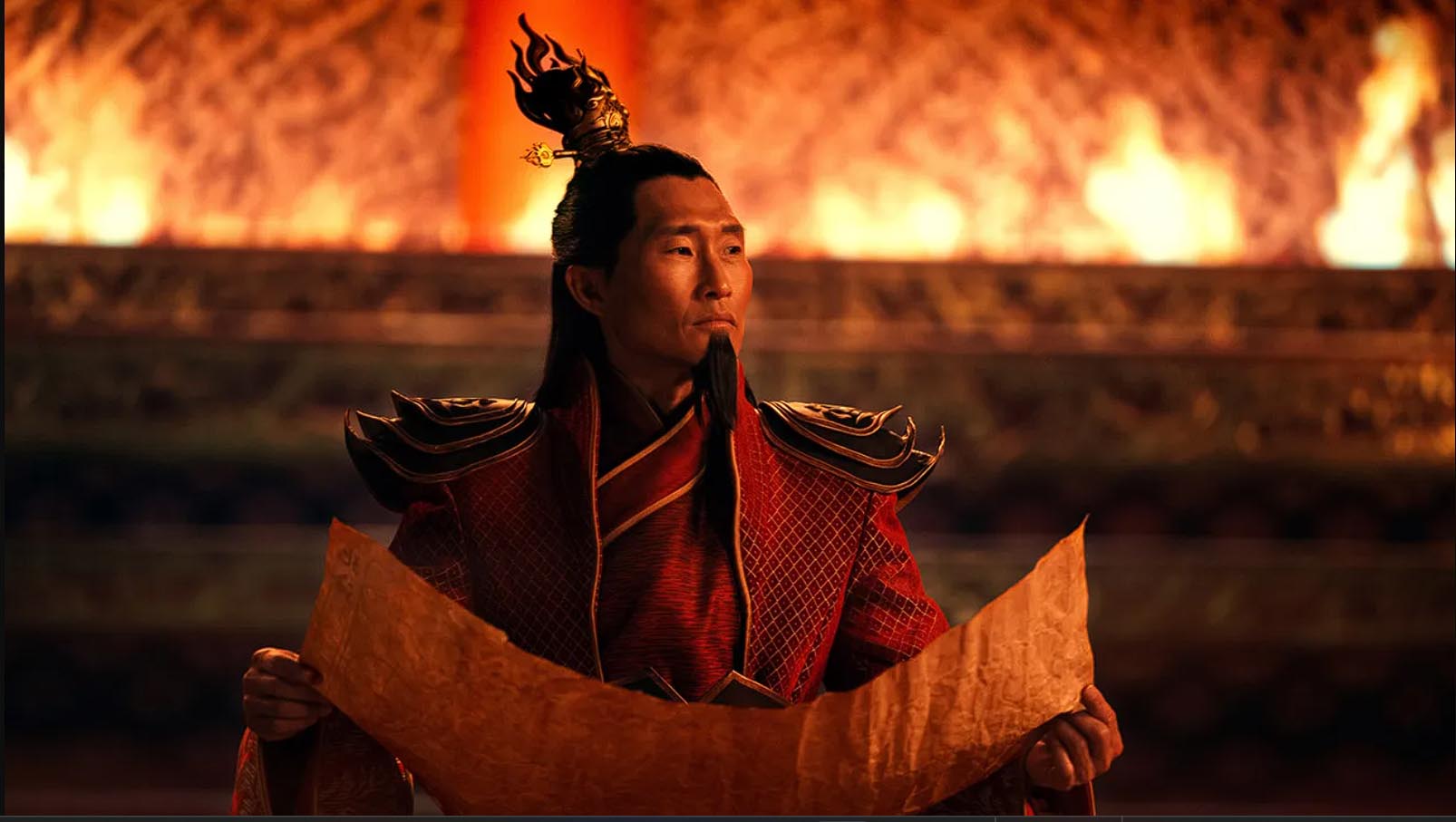
Daniel Dae Kim makes a far better Fire Lord Ozai than Shyamalan’s version. He has also voiced several characters in Avatar: The Last Airbender and the Legend of Korra.
While I am excited to see a better live version of Avatar: The Last Airbender, it still falls a little short of One Piece. I would have liked to see more of Aang’s childishness and more of Sokka being oafish. Props to making him a capable fighter but a little more humor would’ve been nice. Actually, a little more humor would have nice all the way around. Overall, Netflix’s Avatar: The Last Airbender does deliver the familiar storyline we have come to know and love with expected changes that help drive the narrative made specifically for this show and, let’s be honest, this story needs eight episodes to tell it instead of a 90+ minute film that was more miserable than Mai on a good day.
Just like with One Piece, the curse is beginning to fade a little bit more.

