

Straw Hats (L to R): Sanji (Taz Skylar), Zoro (Mackenyu), Luffy (Inaki Godoy), Nami (Emily Rudd), Usopp (Jacob Romero Gibson)
Usually, one would cringe at the sound of ‘live action adaptation’ be it a video game, cartoon, or anime. Comic books have had their successes and failures when it comes to bringing the imaginative into reality, but games and cartoons have been worse off with more failures than successes. Anime is not any better at this unless the show is directly from Japan, and American adaptations of anime have had no successes. However, after watching the first half of the live action One Piece series on Netflix, there could be restored faith in the ‘Land of the Free’ versions of ‘Land of Rising Sun’ animated shows. Let’s jump right in with the best move that was made to prevent this from tanking harder than the ‘Death Note’ adaptation. One Piece creator Eiichiro Oda was hands-on from Day 1 with the production of this series, which has never been done before. He was so close to the process that he should’ve been named ‘executive producer’ and nothing moved forward without his approval. Some scenes were shot several times before Oda gave his ‘thumbs up.’ Since the live One Piece focuses on key moments and meetings that occur early on in the story, the storyline had to be altered. On the flip, the live version does appear to include specific details that were not in the anime, but were featured in the original manga, which was used as the primary source material.

Ilia Isorelýs Paulino portrays the ruthless pirate Alvida, captain of the Alvida pirates
One example of this is Luffy’s scar under his left eye. Luffy attempted to stab out his own eye to prove himself worthy of joining Red-haired Shanks’ pirate crew but missed. This does happen in the manga, but the act was deemed too intense for the anime, and it was not depicted until a TV special was made to tell Luffy’s backstory in greater detail. This is what happens here in the live action One Piece, putting Luffy and Coby’s friendship front and center, and drawing it out the deepen their bond. While the Netflix adaptation differs from the manga and anime, it does not pull away from the source material. Luffy finds the first members of his crew by sneaking through the Marine Base run by “Axe Hand” Morgan. He still finds Zoro tied up in the courtyard and meets Nami, who is disguised as a Naval Officer, who is in search of a map of the Grand Line. This differs from Nami stealing the map from Buggy the Clown; although, the reference of the clown-themed pirate being in possession of the map at one time remains. While on the subject, Luffy and the gang still battle Buggy. Though his defeat has been altered, the end result is still the same.

Kaya is portrayed by Celeste Loots while Alexander Maniatis plays her devious butler Klahadore aka Kuro, captain of the Black Cat pirates.
Finding actors to portray the characters we love can be difficult. Thankfully, Netflix’s One Piece casting is working. True, they cannot compare to their anime counterparts, yet their personalities still shine through the humans portraying them. Inaki Godoy is a great Luffy. He has captured the Straw Hat’s mannerisms and expressions very well. This version of Luffy appears to be a bit clearer headed from how we know him, yet his exuberance is not lost especially during fight scenes. It takes a talented actor to portray the ever-stoic Roronoa Zoro and Mackenyu is no slouch. His portrayal of triple-sword wielding pirate hunter is nearly identical to the manga. This is no surprise since the young actor has appeared in live adaptations of other popular manga including JoJo’s Bizarre Adventure: Diamond is Unbreakable Chapter 1 (2017), Tokyo Ghoul S (2019), the villain Yukishiro Enishi in Rurouni Kenshin: The Final (2021) and Pegasus Seiya in Knights of the Zodiac (2023). Emily Rudd and Jacob Romero Gibson give an excellent performance as Nami and Usopp. While fans may be looking for the over-the-top performances from the anime, the actors do a good portrayal of these characters, playing their personalities well to fit the show’s darker tone. Speaking of dark tones, an example of this is when we are introduced to Captain Kuro of the Black Cat pirates whose creep factor is turned way up to depict how utterly vile he can be.
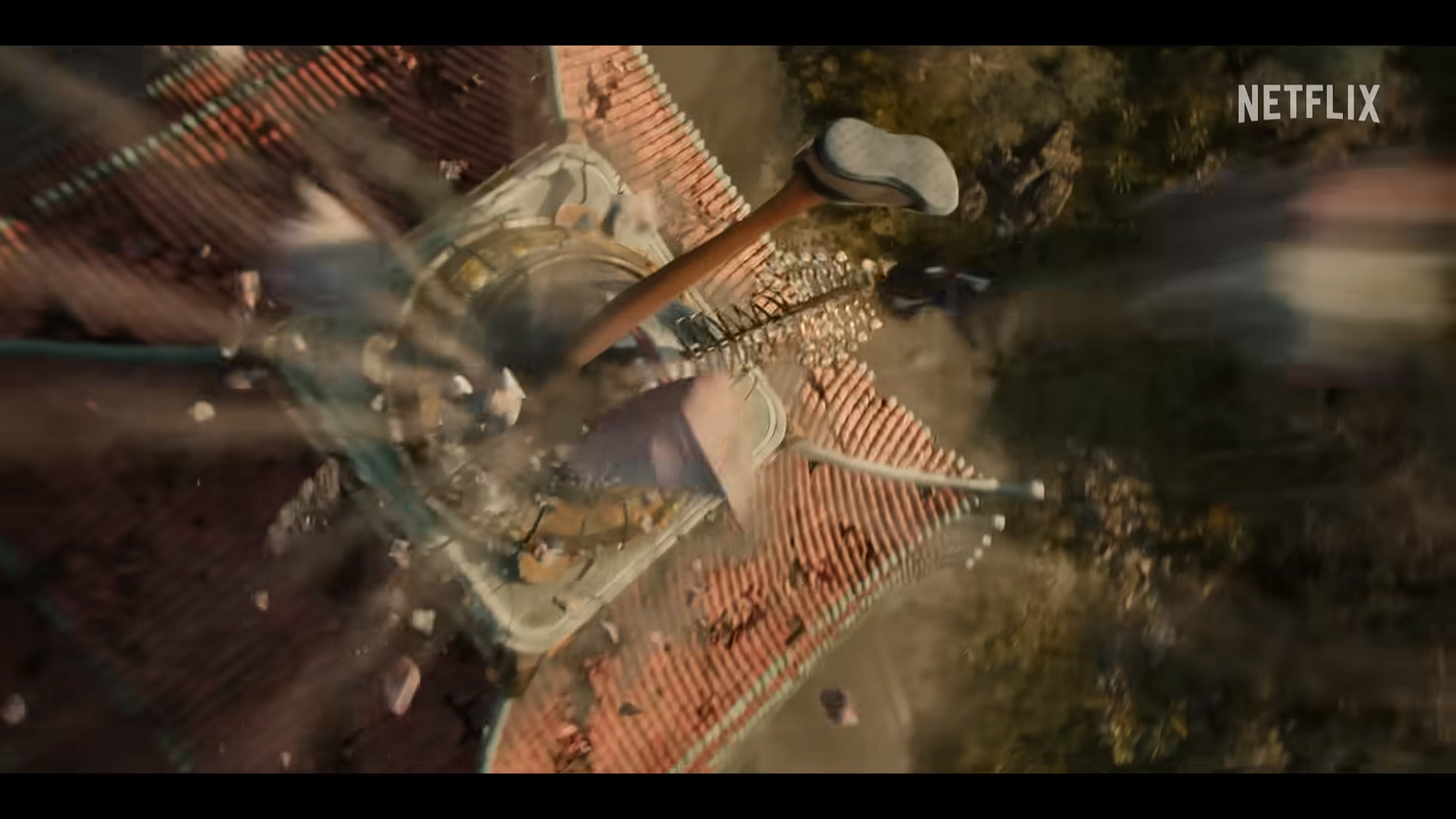
The live action One Piece successfully recreates an iconic scene from the manga.
Netflix’s One Piece may be a live adaptation of an anime, but the tone feels more akin to the “Pirates of the Caribbean” franchise. It does a fine job of finding a balance between the silliness and seriousness of the manga. At no point does it lean too far in either direction. The sets, weapons and props are a near match for the manga, largely in part to Eiichiro Oda and Shueisha’s influence, which makes sense since the latter is responsible for bringing the One Piece manga to fans for over 25 years. With its utilization of the source material and assistance from the creator, does Netflix’s One Piece end the live action anime curse?
I wouldn’t say that it “ends” the curse, but it does have its hands under it and is beginning to lift. While the series does pay homage to Eiichiro Oda’s beloved series, there are still those fans who will find fault, pointing out everything down to the smallest detail. It’s not terrible when compared to “Dragonball Evolution” or “The Last Airbender” (which is getting remade, BTW), but it does raise hope that with the right direction, the right cast and help from the creator, a worthy live action anime can happen. Overall, One Piece is a high-seas adventure that both captures the aesthetics of the beloved anime while the changes made do not dampen the series that we love.
One Piece – Final Trailer

